
UX Research & Audit
Competitor teardowns, analytics and heatmap review, user journey mapping and a written audit of the pages and steps where visitors give up.
Good website design is the difference between a visitor who trusts you within five seconds and one who hits the back button.
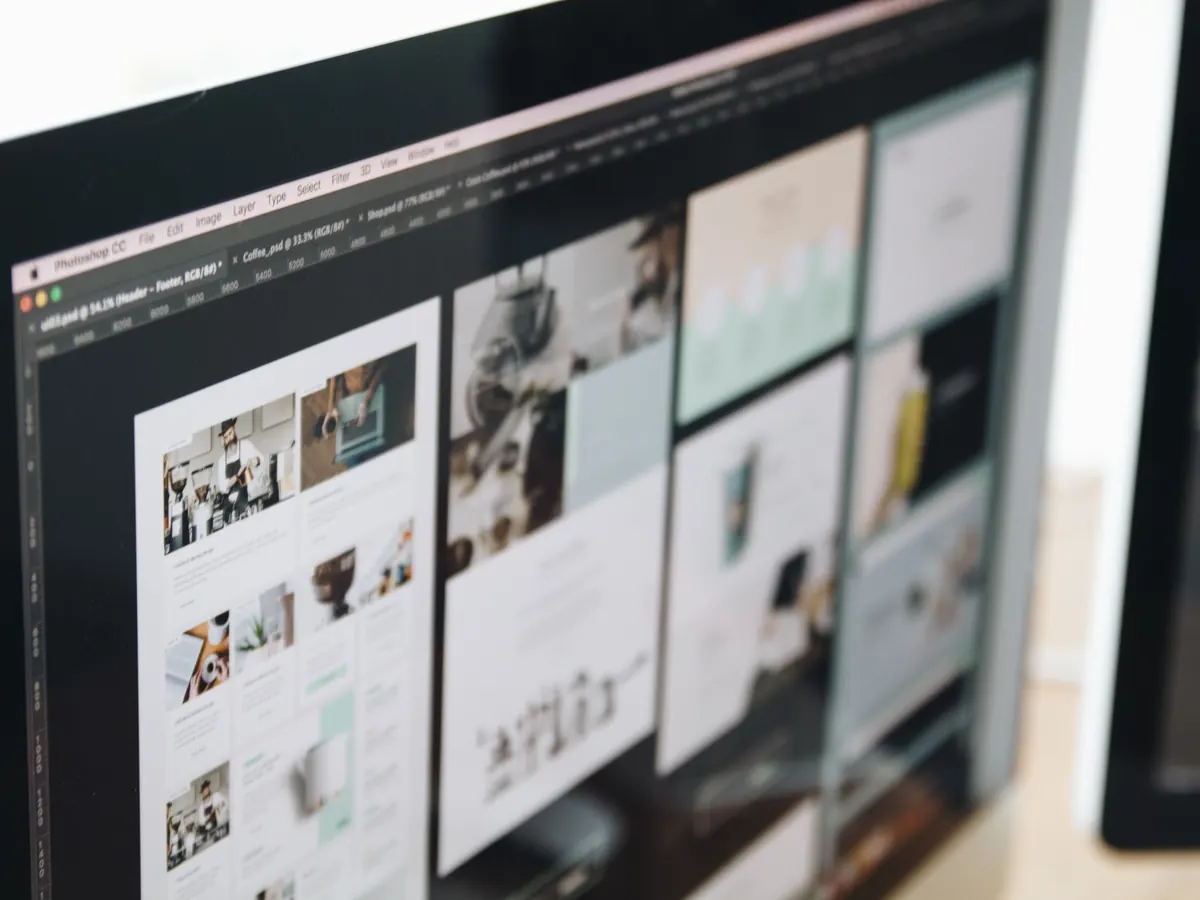
Conversion-focused design
Anyone can produce an attractive mockup. Far fewer can explain why a button sits where it does, why one headline outperforms another, or why a shorter form often out-converts a longer one.
Every design decision we make starts with research: who your buyer is, what objections they arrive with, what your competitors are doing and where your current site loses people. Then we wireframe, prototype and review the journey with you before any visual polish is applied.
The result is a site that looks like it belongs to a serious business, and performs like one.
Where sites lose people
Visitors cannot tell at a glance what you offer, who it is for or what to do next.
When every block asks for something different, visitors often choose nothing at all.
Every extra field is another reason to stop. A good form asks only for what you need to reply.
Cramped columns, tiny tap targets and heavy images turn phone visits into quick exits.
What’s included
From first sketch to a documented system your developers can build from.
Competitor teardowns, analytics and heatmap review, user journey mapping and a written audit of the pages and steps where visitors give up.
High-fidelity designs in Figma with full typography, color and spacing systems, delivered across desktop, tablet and mobile breakpoints.
Clickable prototypes so you and your stakeholders can walk the real user journey before committing to development.
A documented component library with states, variants and usage rules, so future pages stay consistent without a redesign.
Logo refinement, color palettes, typography selection and brand guidelines where your identity needs work alongside the site.
Conversion-focused standalone pages for campaigns, built around a single action and designed for A/B testing from day one.
UX & information architecture
Many design problems are really structure problems: the right content in the wrong order, or navigation labeled the way the business thinks rather than the way customers search.
So we start with the journeys your buyers take, from the page they land on to the moment they get in touch, and design the sitemap, navigation and page hierarchy around them. Wireframes then turn that plan into low-fidelity layouts you can judge on clarity alone, at the stage when changing your mind costs the least.
What you approve before visual design starts:

Responsive, accessible, fast
How a site feels on a phone, how easily it works with a keyboard or screen reader, and how quickly it loads are all decided long before development starts.
We design mobile-first: the phone layout is planned in its own right, with its own content order and navigation, and larger screens are built up from there. Accessibility lives in the components themselves, so every page assembled from them inherits it.
Those decisions carry straight into web development, where every template is checked against Core Web Vitals targets before launch.
Our process
Four stages with a clear approval gate at the end of each.
Stakeholder workshop, competitor review, analytics analysis and agreement on what success looks like in numbers.
Sitemap, user flows and wireframes for every template, reviewed and signed off before visual work starts.
High-fidelity visuals and an interactive prototype, refined in consolidated feedback rounds: two included on most packages, three on custom applications.
Developer-ready Figma files with specs, tokens, assets and documented component behavior, plus a walkthrough call.
Why choose us
Four principles that separate a design that wins awards from one that wins customers.
The structure you approve is one developers can build cleanly and search engines can read, so when you are ready to grow traffic, SEO work starts on solid ground.
Every page has a primary job. We design ruthlessly toward it instead of letting every element compete for attention.
Asset budgets, font strategy and image formats are decided in design, not patched after a bad PageSpeed score.
Prototypes are reviewed with your team and, where possible, with real customers before build, so confusion is found while it is cheap to fix.
Heading hierarchy, content depth and crawlable structure are design decisions, and we treat them that way.
Design in practice
A visually decent site that nobody stayed on. PageSpeed of 31 on mobile, an eleven-second load on 4G, no clear conversion path and a portfolio buried three clicks deep.
Complete redesign and custom rebuild with a performance budget enforced in the build, a restructured portfolio-led journey, and technical SEO remediation across the whole domain.
FAQ
Templates, revisions, mobile layouts, copy, timelines and how we work with your brand or your own developers.
Everything is designed from scratch around your brand, your content and your conversion goals. We do not buy or adapt themes. Where it makes sense, we build you a reusable design system so future pages can be assembled quickly, and that system is yours, designed specifically for you.
If your site runs on WordPress, the approved design becomes a custom WordPress theme rather than an adapted off-the-shelf one.
Our website packages include two consolidated rounds of design revisions, or three on custom applications. That is usually enough, because wireframes are signed off first, which settles structural disagreements before anyone is emotionally attached to a color. Additional rounds are available at an hourly rate if you need them.
Yes. Every template is designed at four breakpoints, starting with the phone. For many businesses, most visits now come from phones, so the mobile layout is usually the one we spend the most time on.
Yes. We take on design-only engagements for clients with in-house or third-party development teams. You receive developer-ready Figma files with full specifications, exported assets, design tokens and documented component behavior, plus a handover call with your developers.
We can. Design and copy are not separable, because layout decisions depend on message hierarchy. We offer conversion copywriting as an add-on, or we will work from your copy. What we cannot do well is design around placeholder text and hope the real content fits later, so we always agree on the message before final design.
We will work within them. If we think a guideline is actively hurting conversion, such as a low-contrast brand color used for buttons, we will show you the evidence and propose a compliant alternative, but your brand rules are yours to set.
For a typical site, the design phase from wireframes to final approval takes around two to three weeks. Sites with many unique templates, or several layers of stakeholder review, take longer. We confirm the timeline once discovery is complete.
Custom design is included in every one of our web development packages, so a site that needs both design and build is covered by a single package. If you only need design, tell us about the project and we will quote it once the scope is clear.
Send us your current site and tell us what it needs to achieve. We will record a free video walkthrough of where visitors are likely to hesitate or drop off, and what we would change first.